
Dear friends,
We would love to hear about your current BioNova® projects. Please send Ryan, ryan@bionovanaturalpools.com, any information and pictures of your projects and we will gladly put them in the newsletter to share with all of the dealers. Thank you and we hope to see your inputs soon!
Here’s what’s happening at BioNova® Natural Pools North America…
When Is It Time to Winterize the Plants in Your Natural Pool or Pond?
As fall progresses and temperatures begin to drop, one of the most common questions natural pool and pond owners face is: When should I start preparing my aquatic plants for winter?
Unlike traditional swimming pools, natural pools and ponds rely on plants and beneficial microorganisms to help maintain a healthy biological ecosystem. Knowing when to trim back vegetation, remove sensitive plants, and leave certain plants alone is an important part of preparing your system for colder weather.
The key is to watch the plants and the weather rather than relying on a specific date on the calendar.
1. Pay Attention to the First Signs of Plant Dormancy
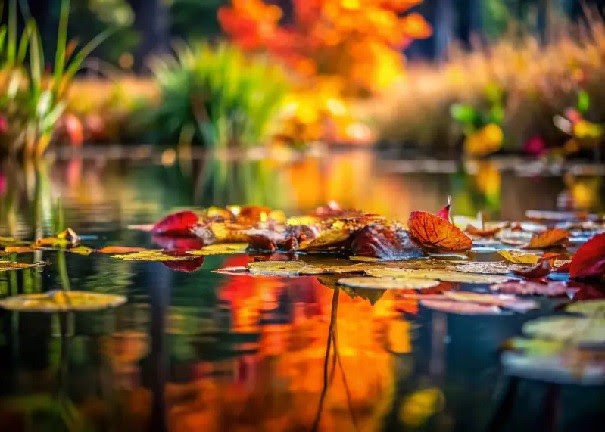
One of the easiest ways to tell that it’s time to begin winter preparation is by watching your plants. As daylight hours shorten and temperatures cool, many aquatic plants naturally begin slowing their growth.
Look for signs such as:
- Leaves turning yellow or brown.
- Stems beginning to wilt or collapse.
- Reduced new growth.
- Flowers fading and plants beginning to die back.
These are natural signs that plants are entering dormancy. Once this process begins, it’s a good time to start removing dead and decaying vegetation before it accumulates in the water.
2. Watch the Overnight Temperatures
Air temperature is another important indicator. A few cool fall days won’t necessarily mean it’s time to winterize, but repeated cold nights and approaching frost are signs that winter preparation should move forward.
Keep an eye on the forecast, especially if you have tropical or frost-sensitive aquatic plants. These varieties may need to be removed and moved indoors before the first hard frost.
Hardy aquatic plants are generally much more tolerant of freezing temperatures, particularly when their roots and crowns remain protected below the waterline.
3. Know the Difference Between Hardy and Tropical Plants
Not every aquatic plant should be winterized the same way.
Hardy plants, including many water lilies, rushes, and native marginal plants, are adapted to survive cold weather. They generally enter dormancy naturally and return when temperatures warm in the spring.
Tropical varieties are different. Many cannot tolerate freezing conditions and should be removed, relocated, or stored according to their specific winter requirements.
Identifying the plants in your regeneration zone or pond ahead of time makes it much easier to determine which ones need attention before cold weather arrives.
4. Don’t Wait Until Everything Has Died Back
Waiting until all the vegetation has turned brown and collapsed can create unnecessary problems. Dead plant material left in the water will decompose, adding organic matter and nutrients to the system.
As plants begin dying back, remove excess dead foliage and fallen leaves. This helps reduce the amount of organic material that will accumulate over the winter and gives your biological filtration system a cleaner starting point in the spring.
Remember, the goal isn’t to remove every plant. It’s to remove excessive decaying material while preserving the healthy portions of your aquatic ecosystem.
5. Know When to Leave the Plants Alone
It’s tempting to cut everything back as soon as fall arrives, but that isn’t always the best approach. Some aquatic plants provide valuable habitat and protection for beneficial organisms throughout the winter.
Certain plants also have crowns, roots, or dormant structures that need to remain undisturbed to produce healthy growth the following spring.
Follow the recommended winter care for each plant species. Avoid aggressive trimming simply to make the regeneration zone look neat and tidy.
The Bottom Line: Let Nature Be Your Guide
Winterizing the plants in your natural pool or pond isn’t something that should happen all at once. It’s a gradual process that follows changes in daylight, water temperature, overnight temperatures, and plant growth.
Start watching your vegetation as fall approaches. Remove dying material as needed, protect sensitive plants before frost arrives, and allow hardy varieties to enter their natural dormant cycle.
A natural pool or pond is a living ecosystem, and successful winterization means working with nature rather than against it.
Pay attention to what your plants are telling you, and you’ll give your natural pool or pond the best possible start when spring returns.
Stay Safe and Healthy.
We hope you all continue to stay healthy during these trying times and wish all of our BioNova® Dealers our best to you and your families.
Questions, Concerns, Thoughts
As always, we encourage you to contact us and share your thoughts, questions, and concerns with BioNova®. We are available to assist you in any way we can. Feel free to email me directly with photos, project updates, testimonials, etc., and we’ll include them in an upcoming Newsletter.
Respectfully,
Ryan Harmer
BioNova® Natural Pools
ryan@bionovanaturalpools.com
609-318-4707
